Sovereignty Construction was founded by two public works leaders who watched contractor after contractor refuse or hesitate to work in Indian Country. This is the company they built in response.
Cahuilla, California. Every construction company has an origin story. Most of them are about opportunity. Ours is about watching something fail, repeatedly, and deciding to fix it.
Before Sovereignty Construction existed, our leadership team ran the Public Works Department for the Cahuilla Band Indian Community in Southern California. I served as Director. Garrett, now our Vice President and COO, was Project Manager. Between us we were responsible for getting infrastructure built on the reservation, roads, facilities, housing, the ordinary things a community needs to function.
The hardest part of that job was not engineering. It was not budget. It was
finding reliable contractors willing to do the work.
Three reasons contractors say no
We saw the same three patterns often enough that they stopped feeling like coincidences and started looking like a structural failure in the market.
The first is distance. Remote reservations are logistically expensive. Crews have to be housed. Materials have to be staged weeks ahead. The nearest supply house might be hours away, and if you forget something, the schedule pays for it. We watched contractors from major markets — including firms in Southern California with every resource you could ask for — decline to bid,
not because they couldn’t build it, but because they didn’t want to solve the logistics.
The second is unfamiliarity with sovereignty. Tribal nations are governments. Contracting with a government means contracts structured differently than the private commercial work most GCs live on: performance and payment bonds at federal thresholds, procurement processes set by tribal code, and questions around dispute resolution and limited waivers of sovereign immunity that get negotiated project by project. None of this is exotic. Experienced parties handle it routinely, and tribal legal counsel navigate it every day. But to a contractor who has never seen it, it reads as risk — and risk they don’t understand is risk they decline.
The third is the one that actually made us angry. Because tribal nations hold exclusive jurisdiction over trust land, state and local building codes generally do not apply there, and state inspectors have no authority to enforce them. That is sovereignty working exactly as it should. Many nations, including a growing number adopting International Code standards through their own tribal codes, hold construction to a standard as high or higher than
the surrounding state.
But the absence of a state inspector on the drive-up is not the same thing as
an absence of standards — and some contractors treat it that way. We saw work delivered on reservation land that would not have survived a plan review anywhere else. Not because anyone approved a lower standard, but because someone assumed no one would check.
That is the pattern that convinced us this company needed to exist.
What we built in response
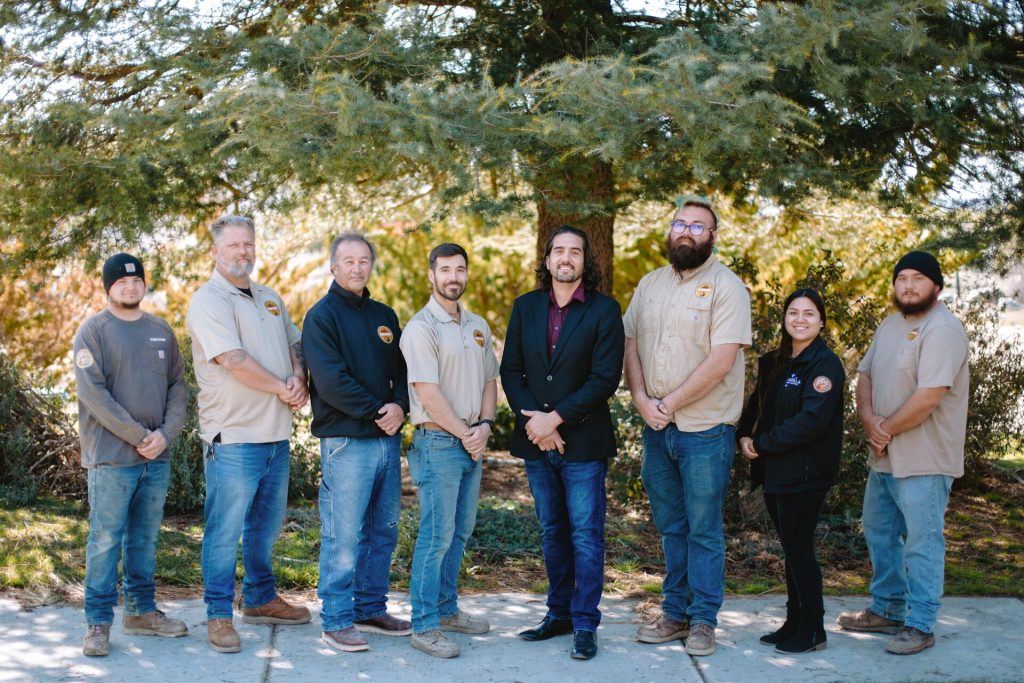
Sovereignty Construction is a Native-owned and operated general contractor, based on the Cahuilla Band of Indians Reservation in California and working across Alaska, California, and Montana. We were purpose-built for the projects described above, the remote ones, the compliance-heavy ones, the ones that sat on someone’s list for three years because nobody would bid them.
We are bonded at the level this work requires. Our surety capacity is $25 million aggregate and $10 million single project. That is not a vanity number. Bonding capacity is frequently the first hard filter in tribal and federal procurement, and it is where a lot of otherwise capable contractors get eliminated before anyone reads their proposal. We built that capacity
deliberately so it would never be the reason a community couldn’t hire us.
We treat logistics as the job, not an obstacle to it. Remote mobilization, seasonal build windows, long-lead material staging, and crew housing are planning problems with known solutions. We price them honestly up front rather than discovering them in a change order.
We already speak the language. We came out of a tribal public works department. We have sat on the owner’s side of the table, written the scopes, managed the grant reporting, and answered to a tribal council. We are not learning how tribal governance works on your project.
We build to code, everywhere, without exception. Where a nation has adopted its own building code, we build to it. Where the funding source sets a standard: HUD, BIA, IHS, DOE we build to that. And where no outside inspector is going to show up, we hold the line anyway, because a roof does not care what jurisdiction it is in.
What’s at stake
Rural and reservation communities are not waiting on construction because the need isn’t there. They are waiting because the market has quietly decided their projects are too much trouble. The result is deferred housing, degraded infrastructure, facilities that age past the point of repair, and grant funding that lapses because no qualified builder came to the table in time.
We started this company to absorb the complexity other contractors avoid, so
that a tribal administrator with a funded project and a real deadline has
somewhere to call.
That’s the whole idea. Building trust, leaving a legacy
