
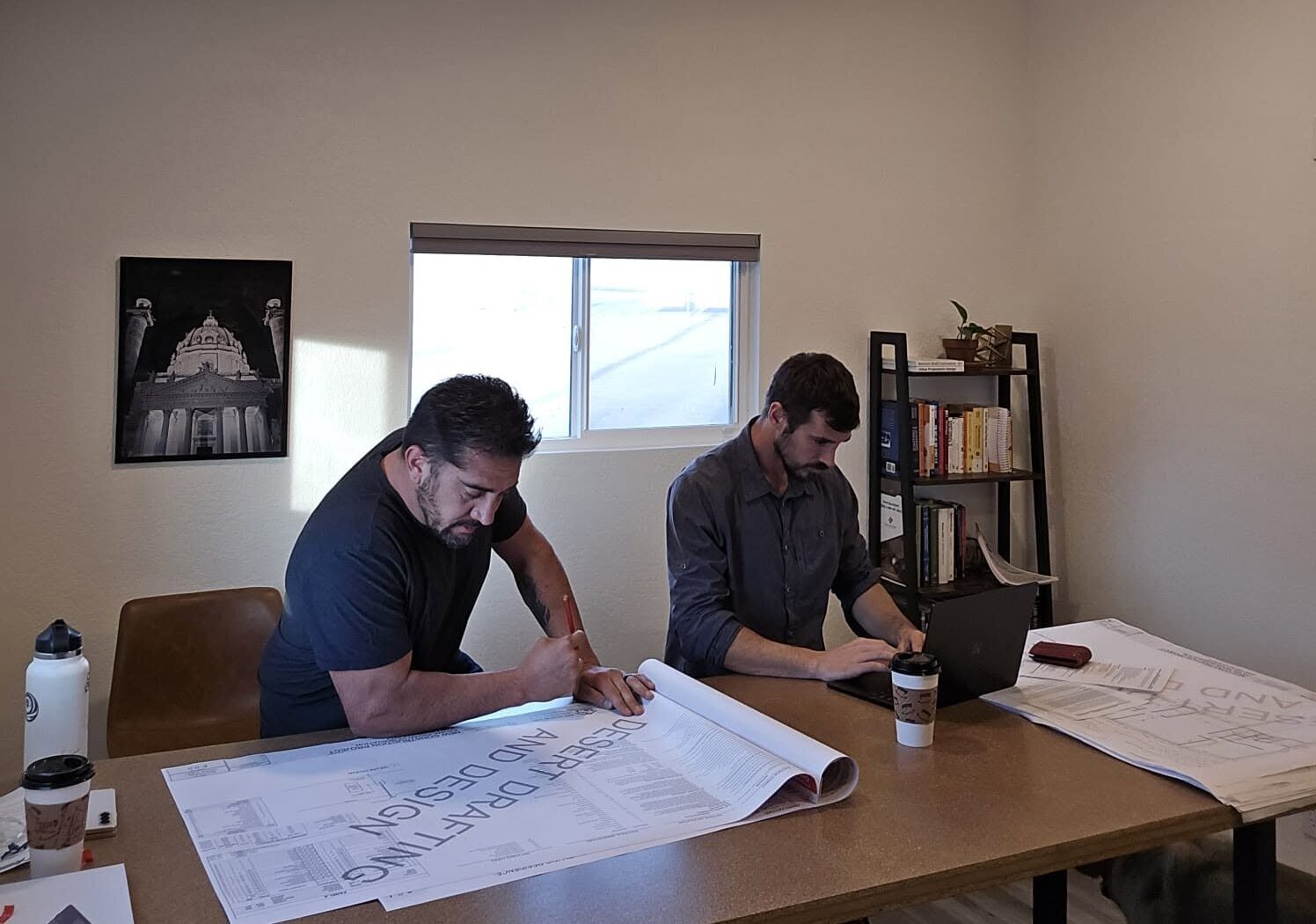
 Our first large project taught me what it actually costs to build a house — and it was not the lumber.
They say confidence comes from doing. I’ve never found a shortcut around that, and I’ve looked.
Our first large project is where I learned it. Before that job, we had skill and we had intent. What we didn’t have was proof, the kind you can only get by putting something real on the line and then living through the outcome.
What we put on the line was everything.
The part nobody sees in the photos
To start, we took out a loan that could have bankrupted our entire personal lives. Not the company’s — ours. Then we invested in the equipment it takes to actually execute, which meant more debt on top of the debt. That is the honest starting position for most contractors, and it is the part that never shows up in the finished-project photo.
Fear will always be man’s greatest obstacle. It was mine. I understood exactly what the downside looked like, in detail, at two in the morning.
We slept on the tool bags and went to work.
It takes more than a hammer and a saw
Here is what I did not fully appreciate until I was the one signing for it.
To build a home you need general liability insurance. You need workers’ compensation insurance. You need commercial automobile insurance. You need bid bonds and performance bonds, which means a surety has to underwrite you, and underwriting means someone examines your finances and decides whether you’re real. You need a general contractor’s license. You need state registration documents, current, for every jurisdiction you touch.
For every nail in a home, there is a piece of paper associated.
None of that is optional and none of it builds anything. It is the cost of being permitted to build at all, and it is the wall a lot of capable builders never get over. I’ve watched good tradesmen, people who can frame better than I can never make the jump, because the jump isn’t about carpentry.
The company behind the company
Then there’s the machinery that runs underneath the jobsite. Websites. Email. SharePoint. QuickBooks. Buildertrend. Trello. Systems that cost money every month whether or not you’re building anything.
And people. It is astonishing how many people it takes to build something. An accounting team. A project management team. Superintendents. Foremen. Every one of them essential, none of them holding a hammer.
Before the ground ever opens
Now the actual build. Most people think it starts with a shovel. It doesn’t.
You find land so you need a surveyor. You have to know whether you can build on it, so you need a soils report and a geotech. You have to decide what you’re building, so you need an architect. You have to decide how it sits on the site, so you need a civil engineer.
Four specialists, thousands of dollars, months of calendar — and not one board has been cut.
Then the fun begins
Not that the previous part wasn’t fun.
Excavation mobilizes. The big equipment comes in and shapes the earth for a homestead, and on our projects the cultural monitors are present while it happens because on tribal land, what’s under the ground matters as much as what goes on top of it. That’s not a delay to be managed around. That’s the job, done right.
Then underground and the concrete crew. The plumbers and electricians for their first pass. Septic systems.
Then the public utility commissions, sometimes our arch nemesis, and I say that with affection I do not always feel. They hold the moving date. You can have every trade lined up perfectly and still watch a family’s move-in slide because a meter hasn’t been set. Anyone who tells you they’ve solved that one is selling something.
Concrete is poured. Underground is in. Framers mobilize, and for the first time the thing looks like a house.
Then it’s windows. Roofing. The door company. HVAC. The plumber back again. Electrical back again. Insulation. Drywall. Flooring. Cabinets. The painter. The stucco team. The garage door team. Rain gutters. The inspector. And of course, always, the end user the client, whose house this actually is,and who has been waiting the entire time.
Count them. More than two dozen separate companies and specialists, each with their own schedule, their own crew, their own insurance certificate, each one able to stop the whole thing cold.
What I want the moral to be
The easy moral here is that a man alone can’t accomplish much, but men collectively accomplish a lot. That’s true. It’s also not what I take from it.
The moral is action. Doing.
Every one of those trades, every certificate, every bond, every terrifying signature, none of it happens until somebody moves first. Inertia is only your enemy while you’re standing still. The moment you’re moving, it changes sides and starts working for you. Momentum is real, and it is available to anyone willing to be uncomfortable first.
So start. Move. Once it’s in motion, it stays in motion and the confidence you were waiting for shows up somewhere along the way, after you needed it and exactly when it counts.
That first large project is the reason this company exists. Not because it made us money. Because it made us certain
